

Ghana has always felt like a second home to me. So, when I saw that it was one of the West African countries we would be touring, it was an easy yes. It didn’t matter that I had been there twice before. I was happy to go again because I hadn’t explored as much of it as I had hoped to. This trip gave me the opportunity to do just that.
Kwame Nkrumah Memorial Park: Where History Happened
Our tour began at the Kwame Nkrumah Memorial Park. On our way there, we drove past Jubilee House, the official residence and office of Ghana’s president. I learnt that the building is featured on the 200 Cedi banknote, which was an interesting little detail to discover along the way.
When we arrived at the memorial park, we were assigned a tour guide who took us around and explained the history of Dr Kwame Nkrumah, Ghana’s first prime minister and later president, and one of the leading figures in Africa’s independence and Pan-African movements.
The park is a national monument dedicated to his life and legacy, and it also serves as his final resting place. As we moved around the grounds, our guide explained the significance of the different monuments and spaces.
The Old Polo Grounds
This was where Dr Kwame Nkrumah stood on 6 March 1957 to declare Ghana’s independence from British colonial rule.
Our guide explained that the grounds had previously been used as a polo field during the colonial period and that Ghanaians were not allowed into the place. According to him, Dr Nkrumah deliberately chose the same location for the independence declaration, making the moment even more symbolic.
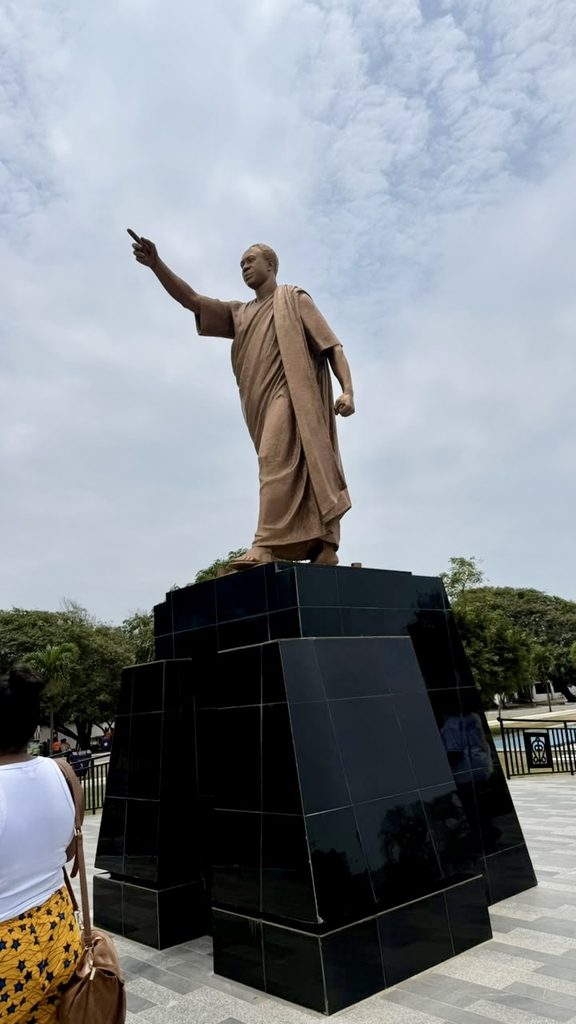
The statue of Dr Nkrumah at the park captures his familiar forward-looking stance. It was the exact spot where he stood to give the independence speech. The meaning of the statue is, “Forward Ever, Backwards Never.” It is a fitting expression of the vision and determination associated with his leadership.
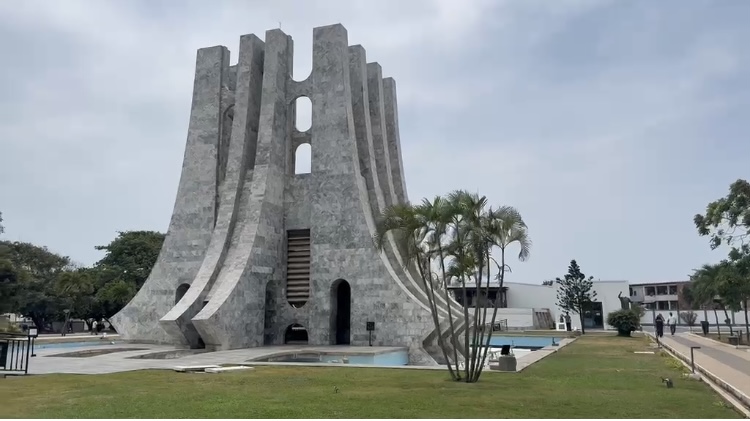
The Mausoleum
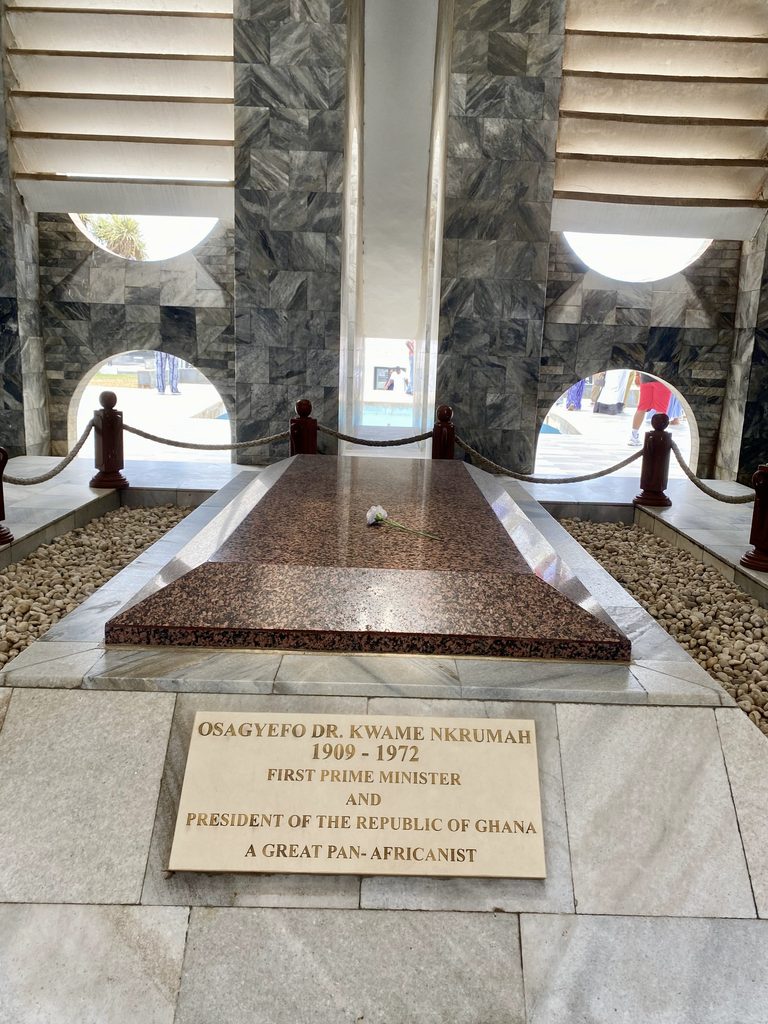
One of the things I learnt was that Dr Nkrumah was buried in three different places.
After his death in Bucharest, Romania, on 27 April 1972, he was buried in Conakry, Guinea, where he had lived in exile after being overthrown in a military coup in 1966. But after three months, his family in Ghana, from a village known as Nkroful in the western region, demanded his reburial. His body was later moved to his hometown, and he was buried there for the second time.
20 years later, in 1992, his remains were exhumed and moved to the Mausoleum at the Kwame Nkrumah Memorial Park, where he was laid to rest for the final time.
His wife, Fathia Nkrumah, requested to be buried beside her husband when she died. Her wish was granted, and she was buried beside him following her death in 2007. It was interesting learning about the different stages of his final journey and how his resting place eventually became part of the memorial park we were visiting.
The Museum
The museum contained photographs, personal belongings and other items that told the story of Nkrumah’s life, from his early years and education to his political career.
Unfortunately, we were not allowed to take photographs inside, but there was quite a bit to see. Among the items on display were his personal belongings from his student days at Lincoln University in Pennsylvania, including a mattress and a long, narrow mirror. There was also the leather luggage he used on his trip to Vietnam in 1966, shortly before the coup that removed him from power.
One of the photographs that caught my attention was of him dancing with Queen Elizabeth II at a ball in Accra during her 1961 visit to Ghana. The museum also had some furniture from his home.
I found it interesting to see these personal items up close. Sometimes, history can feel distant when you only read about it in books. Seeing the belongings of someone whose decisions helped shape a country makes the story feel a little more tangible.
Osu Castle
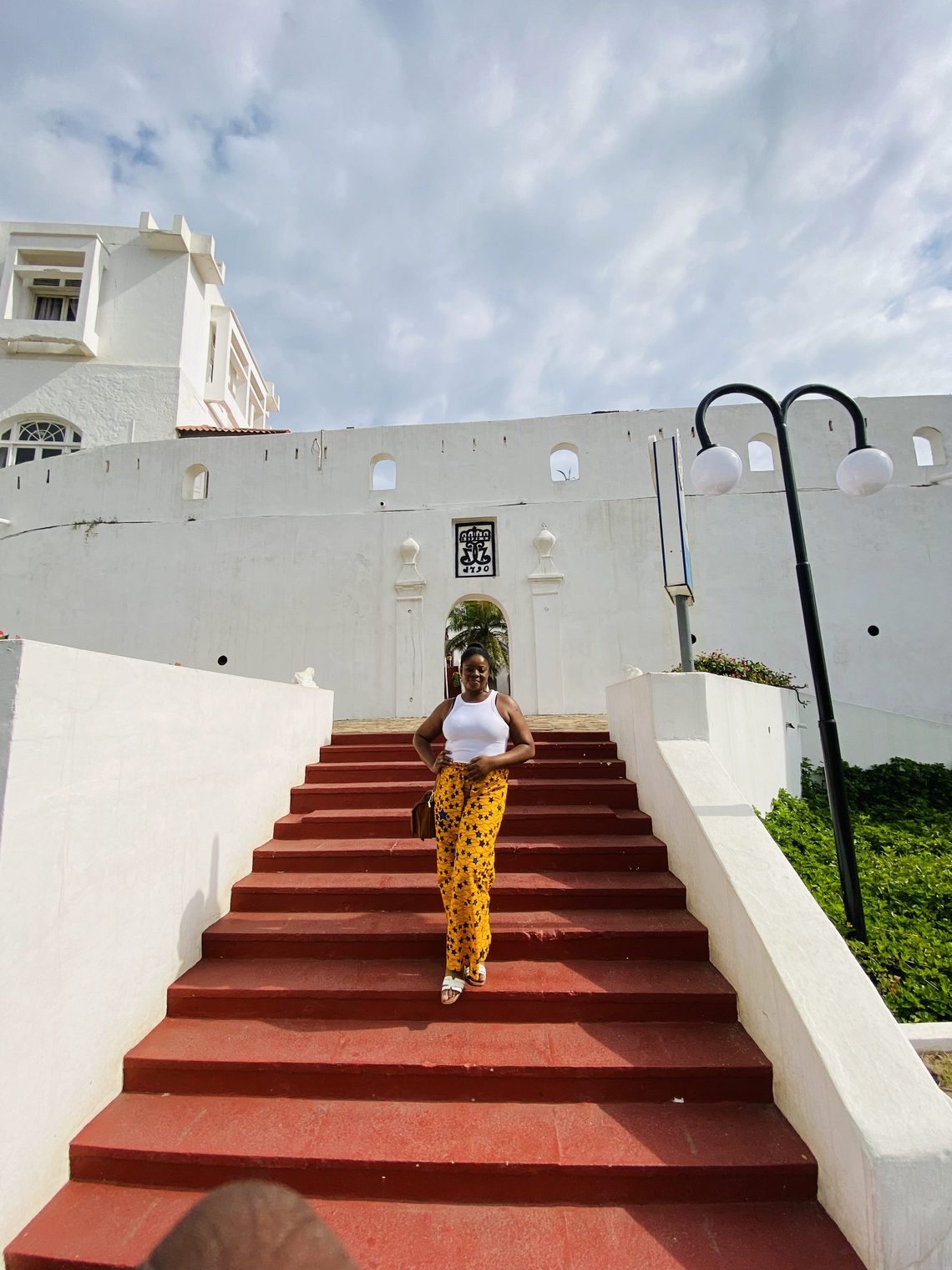
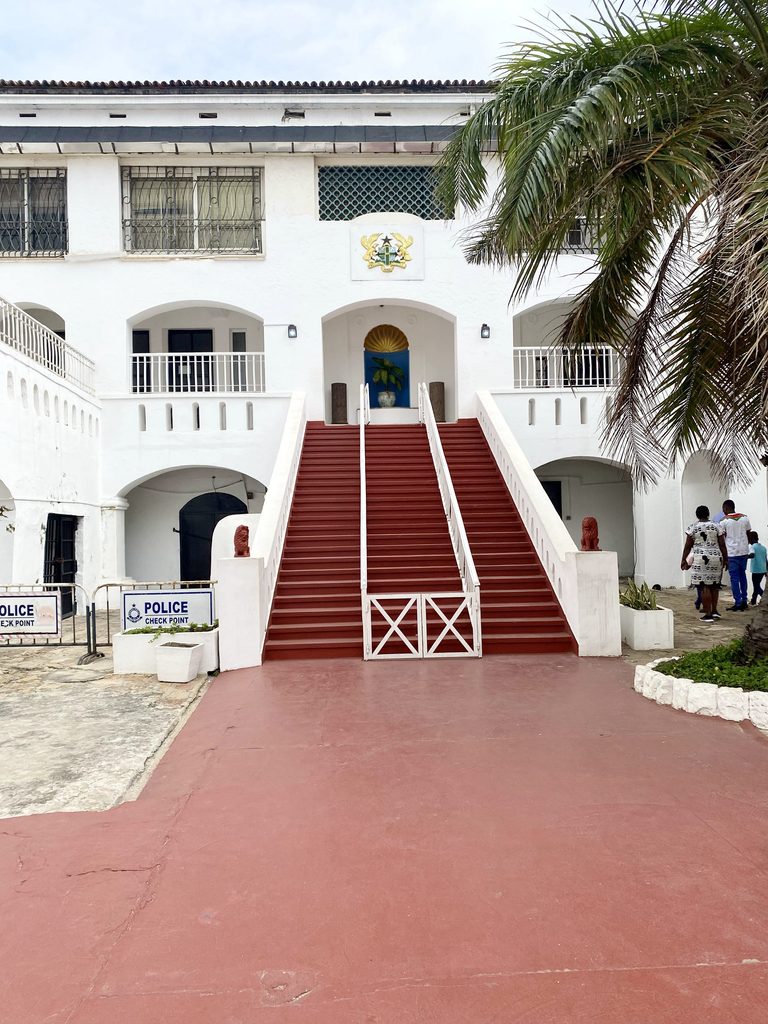
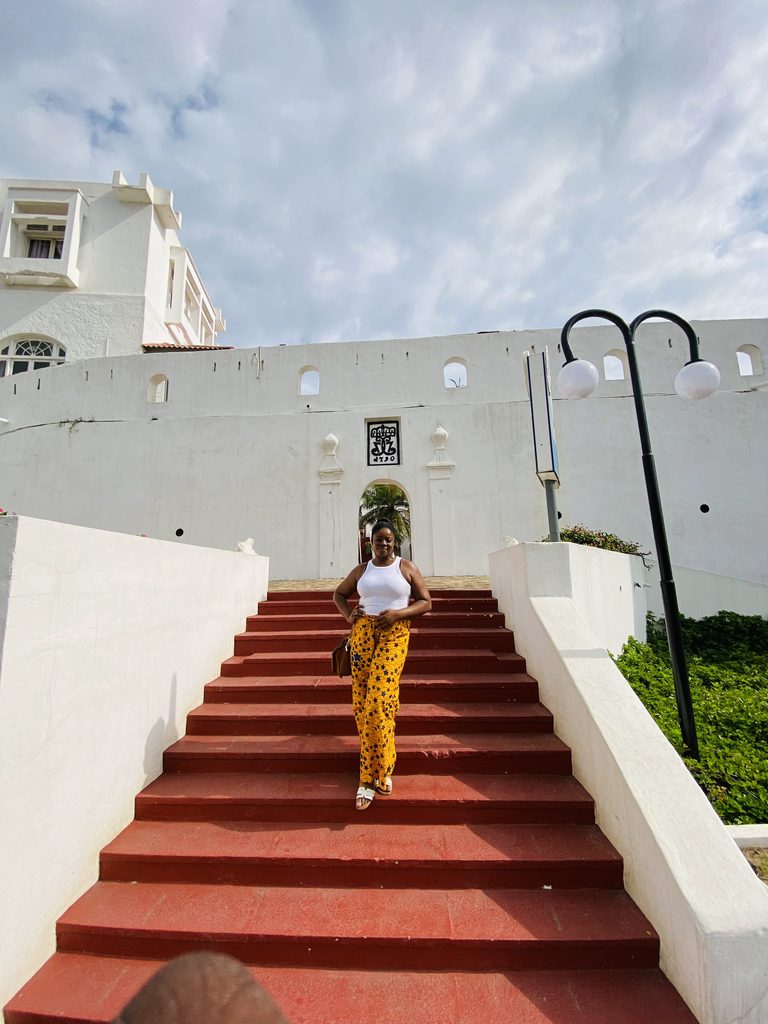
Our next stop was Osu Castle. The castle was originally built by the Danes and later sold to the British in 1850. Over the years, it served different purposes, including as a seat of colonial administration and, later, as a place of government.
As we toured the castle, our guide took us through its different rooms and explained how the building had been used over time. One of the things that stood out to me was the prison area, where the enslaved people were held, and the way the rooms were arranged. Their food came in through a little opening in the ceiling. A church was situated above the prison area.
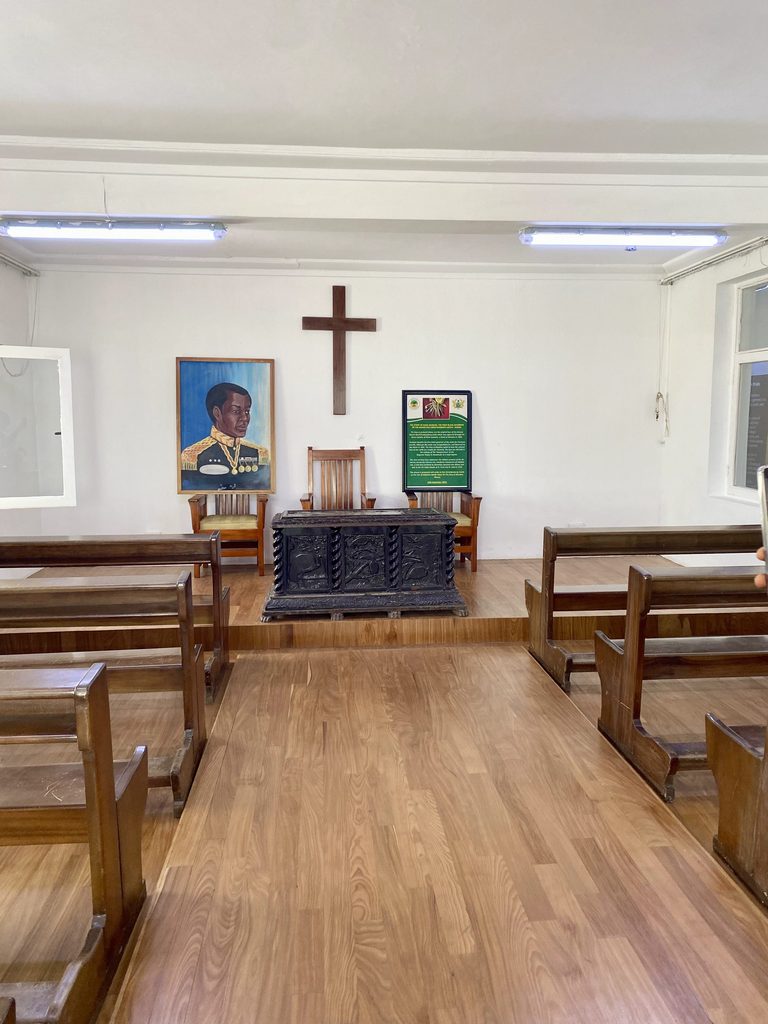
It was difficult not to think about the people who had passed through those rooms and what their experiences must have been like. The history of the transatlantic slave trade is painful enough to read about, but visiting a place connected to that history brings it closer in a way that words sometimes cannot.
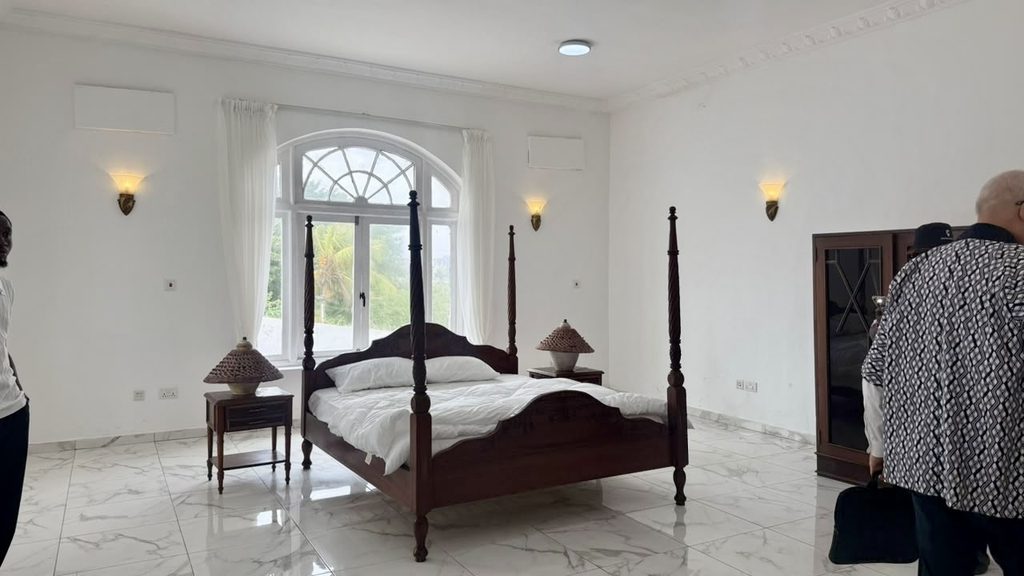
We also learnt about the castle’s connection to Ghana’s political history. It served as the seat of government for several Ghanaian administrations, including under Jerry John Rawlings. Our guide pointed out a presidential walkway and other areas associated with political leaders and official visits.
There were also stories about Queen Elizabeth II’s visit to Ghana in 1961, including the furniture and rooms connected to that period.
Door of No Return
One of the most sobering parts of the tour was learning about the Door of No Return, a name associated with the departure of enslaved Africans from the continent. At the time, 120,000 slaves were taken. Some committed suicide by jumping into the ocean.
Our guide also spoke about the return of ancestral remains to Ghana, and because of that, the door was renamed the Door of Return. The return of these remains represents an important symbolic reconnection between Africa and the descendants of Africans taken away through slavery. It is a reminder that, although people were forcibly separated from their homes and families, their stories and connections to the continent have not been forgotten.
Osu Castle was a lot to take in. There was so much history within its walls, and not all of it was easy to sit with. But I think that is part of the importance of visiting places like this: they allow us to confront the past and remember the people whose lives were shaped by it.
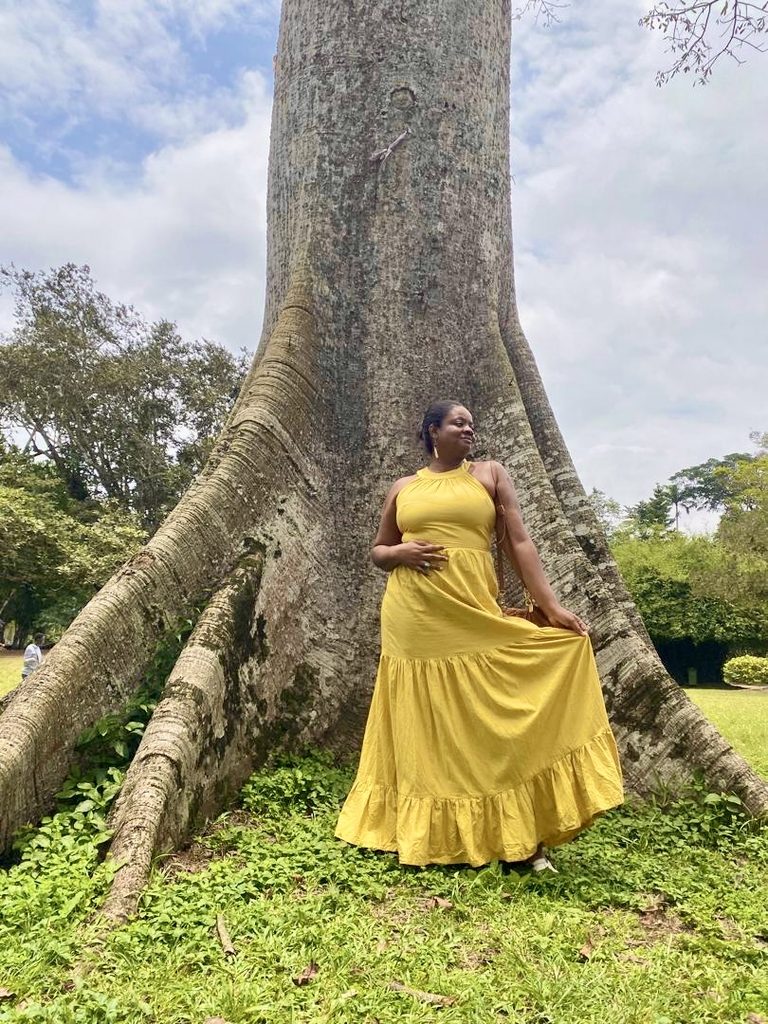
Aburi Botanical Gardens and Its Remarkable Trees
Something about Aburi Botanical Gardens felt like stepping into another world. It was as though the trees were living creatures that related to one another every day and had lives of their own, except that they were trees.
Our guide introduced us to several remarkable trees, each with its own story. There was the tree that had properties that helped enhance sexual performance for men, the pair of trees standing side by side that were described as a couple, and the tree known as the God Tree, which was said to have healing properties and was visited by villagers bearing gifts.
Then there was the strangler ficus tree, which grows around another tree and eventually engulfs it then recreates the tree. Seeing it up close was fascinating. We also came across the Tree of Life, a carved tree by Ghanaian artist Kofi Appiah, with figures representing different aspects of human life, relationships and leadership.
The stories were so fascinating that, at some point, I had to ask our guide whether they were true or simply folktales. He assured me that they were true. Of course, some of the stories were rooted in local beliefs and traditional knowledge, while others could be explained by the way the trees grow and interact with their surroundings.
Either way, I was captivated. I still cannot get over the fact that I stood inside a tree, a whole, huge tree! What an experience.
Aburi Gardens was one of the highlights of the trip for me, largely because of how much I enjoyed learning about these trees and the stories surrounding them. There was so much to take in that I knew I wanted to write about them separately. So, yes, the remarkable trees of Aburi deserve a post of their own.
Asenema Waterfalls
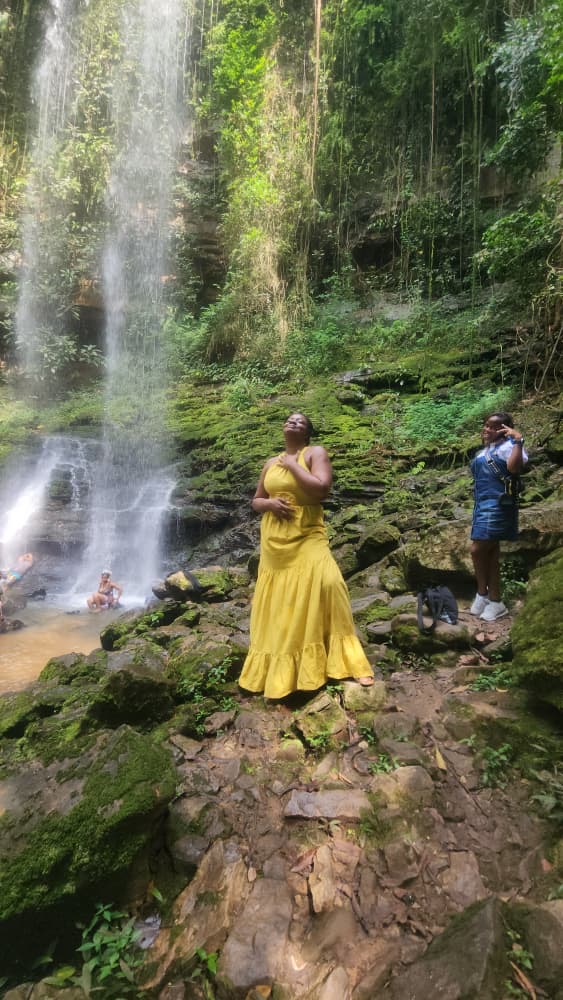
Waterfalls have always fascinated me, and it was beautiful to witness one at such close range. Before this trip, I don’t think I had ever been this close to a waterfall, at least not that I can remember.
It was about a five-minute walk down to the falls. We followed a little path surrounded by trees, with a stream of flowing water alongside us. When we finally got there, I stood and watched as the water cascaded over the rocks. There was something peaceful about it, almost sublime, if you will. It made me think about how beautiful God’s creation is.
I managed to climb some rocks to get a little closer to the waterfall and take a picture. Some people stood directly under the falling water and let it pour over them. I wish I had gone in to experience that too.
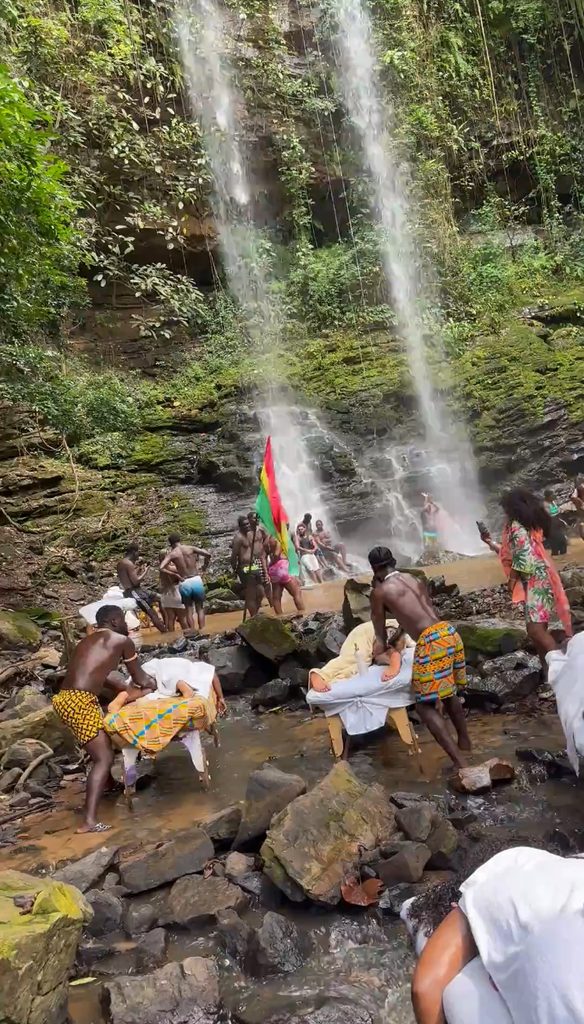
Masseurs By The Waterside
Then there were the masseurs by the waterside. They were shirtless, muscular men giving massages, mostly to women. I didn’t notice any men going for one while we were there. We watched as they gave full-body massages, working on their clients’ legs, backs and arms with practised movements.
Only the bold ones went for it. It was a bit too open for me. The thought of everyone watching while I was being massaged by a muscular man was definitely not on my bucket list. So we stood there watching, pretending we had no interest in being massaged.
It didn’t help that one woman with a poorly done BBL was also getting a massage and seemed to be enjoying all the attention she was getting from onlookers. I heard that she later blew a kiss to one of the ladies in our group who was watching her. I’m guessing that was her celebrity moment.
All in all, Asenema Waterfalls was a lovely experience. Between the sound of the water and the little moments that made us laugh, it was a refreshing change from the historical sites we had visited earlier.
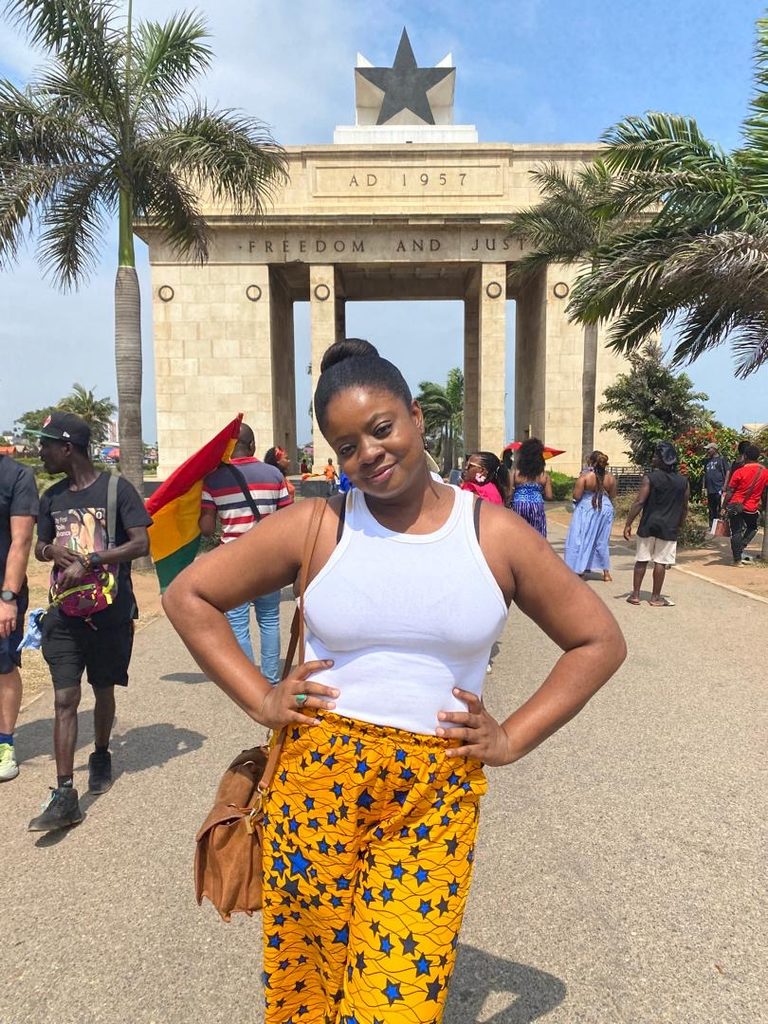
Independence Square
Independence Square, also known as Black Star Square, is one of Ghana’s most recognisable national landmarks. It was commissioned by Ghana’s first president, Dr Kwame Nkrumah, and completed in 1961, four years after the country gained independence from British colonial rule.
The square was built to commemorate Ghana’s independence and has since become an important setting for national celebrations, military parades and other major public events.
We stopped there briefly to take pictures. There were options to sit on a horse while holding the Ghanaian flag or simply pose with the flag. There were also people selling souvenirs for anyone who wanted to take a little something home.
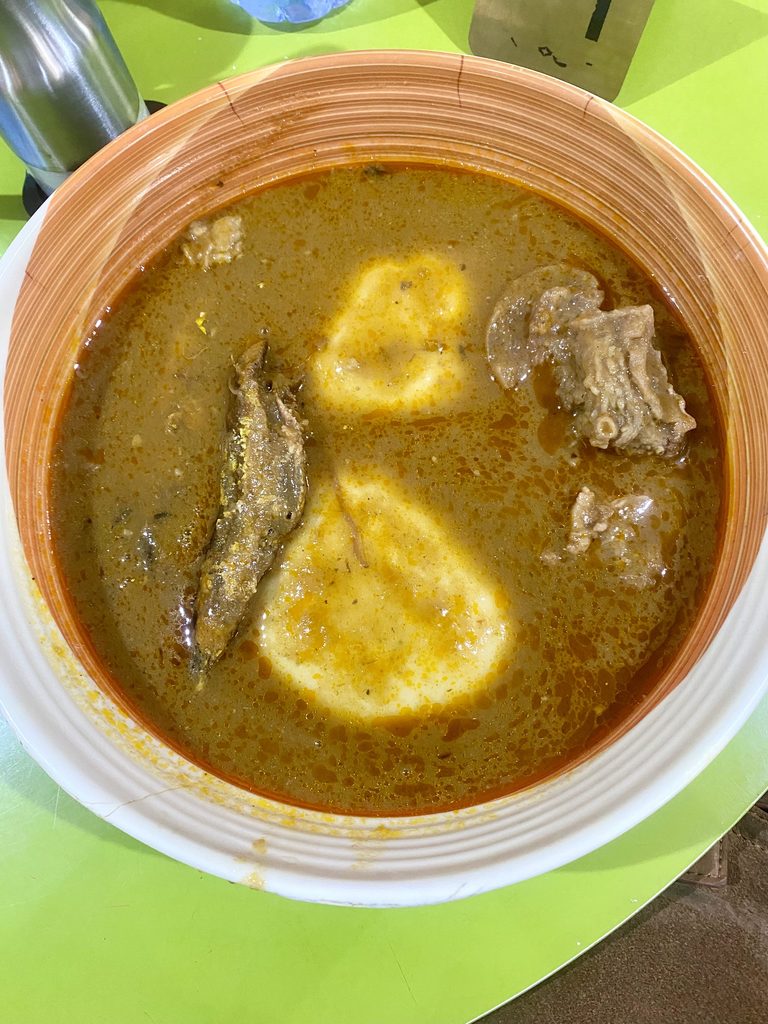
A Taste of Ghana
Of course, no trip is complete without trying some of the local food. Ghana had a few dishes I was particularly interested in trying, however, these two were the ones at the top of my list.
Fufu and Light Soup
I had heard a lot about fufu and light soup, and most of what I had heard was good. So, when we set out on this trip, I knew it was one of the meals I wanted to try.
One of the best decisions the tour company made was taking us to a local restaurant where we could experience the dish. And honestly, it was more delicious than I had imagined.
While some of us enjoyed it, a few people felt the soup tasted like meat stock. For me, though, it was really good. I was glad I got to try it.
Waakye
Have you ever seen a meal where a variety of foods that you might ordinarily eat separately all come together on one plate? Well, that is waakye for you.
The version I tried came with rice, beans, garri, spaghetti, egg, salad and fish. I wasn’t sure I wanted to try it the first time I saw it, to be honest. It looked like quite a lot going on on one plate!
But it didn’t turn out too badly. However, I left out the garri because I didn’t just understand it.
My time in Ghana was a lovely mix of history, nature, good food and new experiences. Even though this was my third visit, I still found new things to appreciate. There is always something you haven’t seen, a story you haven’t heard or an experience waiting for you. This trip gave me another reason to keep exploring. And now, it was time to cross the border and see what Togo had in store for us.
No Comments